

Brief
Define the product, specification, quantity, packaging, destination market, delivery requirements and target price.

Panoria Global connects international buyers with suitable producers, processors, mills and supply partners across key food-producing markets. We assess sourcing options against your product specification, quality requirements, seasonality, target price and destination market—helping you identify a practical route from origin to delivery.

Successful international sourcing requires more than identifying where a product is grown or manufactured. It requires finding suppliers capable of meeting the required specification, maintaining quality across repeat orders and supporting the documentation and packaging needed for international trade.
Panoria Global works with a developing network of suppliers, mills, processors, exporters and production partners across relevant food-producing markets. Supported by experienced industry specialists, we assess opportunities category by category, recognising that every product has its own sourcing dynamics, production cycles and supply-chain requirements.
Whether the requirement is rice, grains, spices, edible oils, IQF frozen products, seafood or other food categories, our focus is on identifying suitable supply partners and aligning their capabilities with the buyer’s needs.

Our sourcing process considers the complete commercial requirement—not just the product price. We evaluate potential origins, supplier capabilities, quality expectations, seasonal availability, packaging and logistics to help buyers make informed procurement decisions.
Our recommendations are shaped by the information available, supplier responses and the requirements of the intended market.
Procurement turns a sourcing decision into a clearly defined commercial transaction. Panoria coordinates the product requirements, supplier discussions, order terms and shipment planning so that expectations are established before the order proceeds.
Agree the product, grade, quality parameters, packaging, quantity and delivery requirements with the buyer and selected supplier.
Coordinate pricing, payment terms, lead times, delivery terms and other relevant purchase conditions.
Place and coordinate the order with the selected supplier in line with the agreed commercial arrangements.
Track order progress, production readiness and shipment milestones, coordinating updates between the parties.
The objective is straightforward: clear specifications, defined responsibilities and better visibility throughout the procurement process.

A supplier’s suitability depends on the specific product, order volume, destination market and commercial requirements. Panoria evaluates relevant capabilities before recommending a supplier for consideration. Our assessment may cover:
Where specific certifications, approvals or export permissions are required, these should be verified for the supplier, facility, product and destination before the order proceeds.
The lowest quotation is not always the strongest commercial choice. Product consistency, supplier capability, documentation and delivery reliability all contribute to the real cost of a supply arrangement. Our sourcing principle
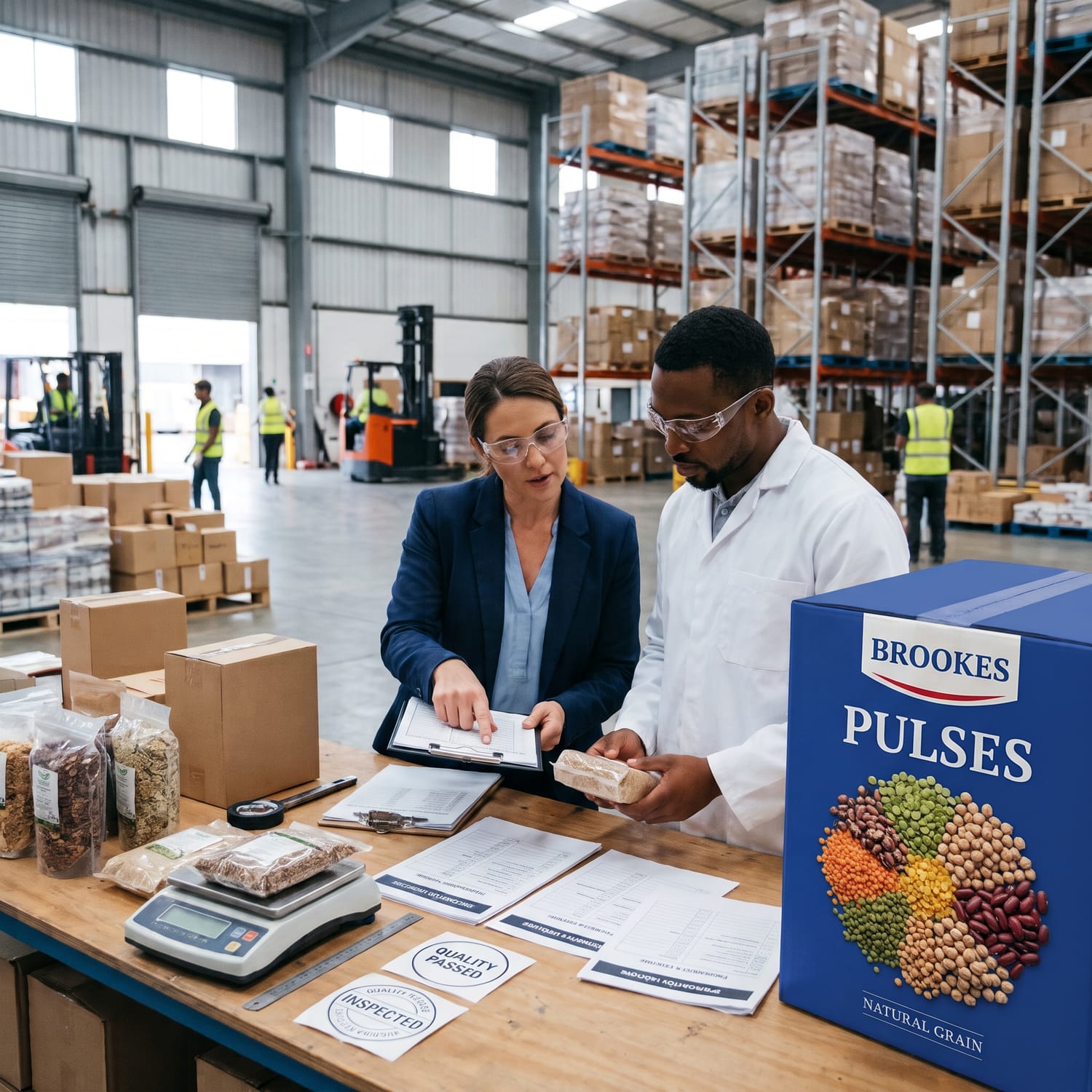
Quality is determined by the agreed specification and the supplier’s ability to meet it. Panoria coordinates relevant product, packaging and documentation requirements between buyers, suppliers and other parties involved in the transaction. Depending on the product and market, this may include:
Inspection, testing and certification are arranged according to the product, transaction and agreed scope. Any quality assurance or compliance statement is subject to the supporting documentation and services actually provided.

Not every requirement fits a standard catalogue. Buyers may need a particular variety, grade, origin, ingredient profile, pack size, price point or private-label format.
Panoria Global works from the customer’s brief to identify potentially suitable origins and producers, assess available options and coordinate the requirements needed to develop a sourcing solution. Customised sourcing may include:
This approach is particularly relevant for importers developing a new category, distributors expanding their portfolios and brands looking for suitable manufacturing partners.

Sourcing creates value when the product can move from supplier to buyer under agreed commercial, quality and delivery conditions. Panoria coordinates the key stages of the supply process with the relevant suppliers, logistics partners and other service providers. Our coordination may cover:
The precise scope depends on the transaction and the services agreed. Our aim is to provide buyers with a coordinated process, clear communication and a practical route from procurement to destination.
Each sourcing requirement is handled according to the product, market and buyer’s specific needs.
Define the product, specification, quantity, packaging, destination market, delivery requirements and target price.
Identify potentially suitable producing regions and sourcing options against the brief.
Assess relevant suppliers for capability, capacity, quality requirements, documentation and commercial suitability.
Agree pricing, product specifications, quality requirements, order quantities and shipment schedules, then coordinate the order through production, dispatch and delivery.

Tell us what you need, where it needs to go and the specifications you need to meet. Panoria Global will assess the requirement and coordinate suitable sourcing options, indicative pricing and supply arrangements based on available supplier information.
To help us respond effectively, include: